
What Not to Flush with a Septic System: Complete Guide
Knowing what not to flush with a septic system is one of the simplest and most effective ways to protect your home and avoid expensive repairs. Many common household products look flushable but cause serious damage to septic tanks, sewer lines, and drain fields. At Eco Septic Solutions, we see the results of improper flushing habits every week across Ventura County. Therefore, this guide covers everything that should and should not go into your septic system.
How a Septic System Works
Before diving into what not to flush, it helps to understand how your system works. Wastewater flows from your home into the septic tank. Inside the tank, solids settle to the bottom as sludge. Lighter materials float to the top as scum. The liquid layer in the middle flows out into the drain field. There, soil filters and absorbs it naturally.
Bacteria inside the tank break down organic waste continuously. However, anything that disrupts this balance creates problems over time. In addition, non-biodegradable materials accumulate inside the tank and make things worse. As a result, the system fills up faster and requires more frequent service.
What You Can Safely Flush
Only two things belong in a septic-connected toilet: human waste and toilet paper. Standard toilet paper dissolves quickly in water and breaks down easily inside the tank. Furthermore, it does not disrupt the bacterial process that keeps the system healthy. Everything else should go in the trash.
Items That Should Never Be Flushed
The following items cause some of the most common and costly septic problems we encounter in Ventura County. None of them belong in a septic system, regardless of how they are labeled.
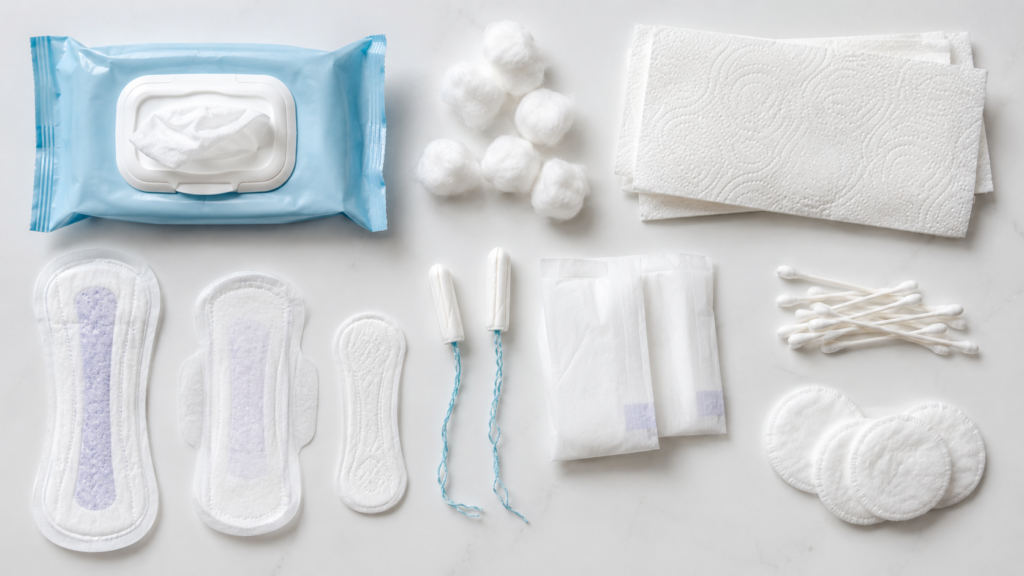
Flushable wipes are one of the biggest culprits. Despite the name, flushable wipes do not break down in a septic tank the way toilet paper does. Instead, they accumulate inside the tank and clog the inlet baffle. Eventually, this causes backups. Read more about what happens in our post on what to do during a septic tank backup.
Paper towels and tissues are thicker than toilet paper and designed to hold together when wet. As a result, they do not dissolve in the tank and add to the solid layer faster than the system can handle.
Feminine hygiene products including tampons and pads are not biodegradable inside a septic tank. Moreover, they expand when wet and can block pipes and baffles quickly.
Cotton balls and cotton swabs seem small and harmless but they do not break down. Consequently, they accumulate at the bottom of the tank and contribute to sludge buildup that requires more frequent pump-outs.
Diapers should never go near a toilet connected to a septic system. They expand significantly in water and will block pipes immediately.
Condoms are made of latex or polyurethane, neither of which breaks down inside a septic tank. Instead, they float in the tank and clog the outlet baffle over time.
Dental floss wraps around other debris inside the tank and pipes. As a result, it creates tangles that trap solids and restrict flow.
Medication does not belong in a septic system. In fact, pharmaceutical chemicals kill the beneficial bacteria your tank relies on and can leach through the drain field into groundwater.
What Should Never Go Down the Drain
Toilets are not the only entry point that matters. Kitchen and bathroom drains connected to your septic system require equal care.
Cooking grease and oils are among the most damaging substances for a septic system. Grease solidifies inside the pipes and tank, forming thick blockages. Furthermore, it shortens pump-out intervals significantly. Never pour grease down the drain, even in small amounts.
Coffee grounds accumulate at the bottom of the tank and do not break down. They add to the sludge layer faster than organic waste. Consequently, service intervals become shorter and less predictable.
Chemical drain cleaners kill the bacteria inside the tank. Without these bacteria, waste does not break down properly. Instead, the tank fills up faster and system performance drops. Use enzyme-based or septic-safe alternatives instead.
Bleach and antibacterial products in large quantities also disrupt bacterial activity. However, moderate use of standard household cleaners is generally acceptable. Avoid pouring concentrated bleach or disinfectants directly down the drain.
Paint, solvents, and chemicals are toxic to the septic system and to the environment. They kill bacteria, damage the tank lining, and contaminate groundwater. Therefore, dispose of these materials at a designated hazardous waste facility.
What About Garbage Disposals?
Garbage disposals add significant food waste to the septic tank. Ground food particles accumulate as sludge and increase how often the tank needs pumping. Therefore, if your home has a garbage disposal connected to a septic system, plan to pump more frequently. Our guide on how often to pump your septic tank in California covers adjustments for garbage disposal households.
Septic-Safe Products to Look For
Many household products are available in septic-safe formulas. For example, look for toilet paper labeled as single-ply or septic-safe. Choose enzyme-based drain cleaners over chemical ones. In addition, select laundry detergents and dishwasher products that are phosphate-free and septic-safe. These small swaps reduce stress on your system without changing your daily routine significantly.
How Proper Habits Protect Your Drain Field
Everything that enters your septic system eventually reaches the drain field. For instance, non-biodegradable materials clog the distribution pipes and soil. In addition, grease coats the soil surface and prevents absorption. Furthermore, chemicals kill the soil bacteria that filter the effluent naturally.
As a result, drain field replacement becomes necessary much sooner than it should. This is the most expensive septic repair a homeowner faces. Therefore, protecting the drain field through careful flushing habits is far less costly than replacing it. Read our post on how long a septic system lasts to understand how daily habits affect long-term performance.
For a complete list of septic-safe practices, the EPA septic protection guide is an excellent resource. Additionally, the California Water Resources Control Board provides state-specific guidance for homeowners with private septic systems.
Keep Your Septic System Healthy with Eco Septic Solutions
Good flushing habits combined with regular professional service keep your septic system running efficiently for decades. Eco Septic Solutions provides pumping, cleaning, camera inspections, clog repair, and emergency service for homes and businesses throughout Ventura County.
We serve Ojai, Ventura, Oxnard, Camarillo, Thousand Oaks, Moorpark, Simi Valley, Fillmore, Santa Paula, and all surrounding communities. Our team is licensed, insured, and available 24 hours a day.
Call us at (805) 670-1305 or contact us online to schedule your next service.


