
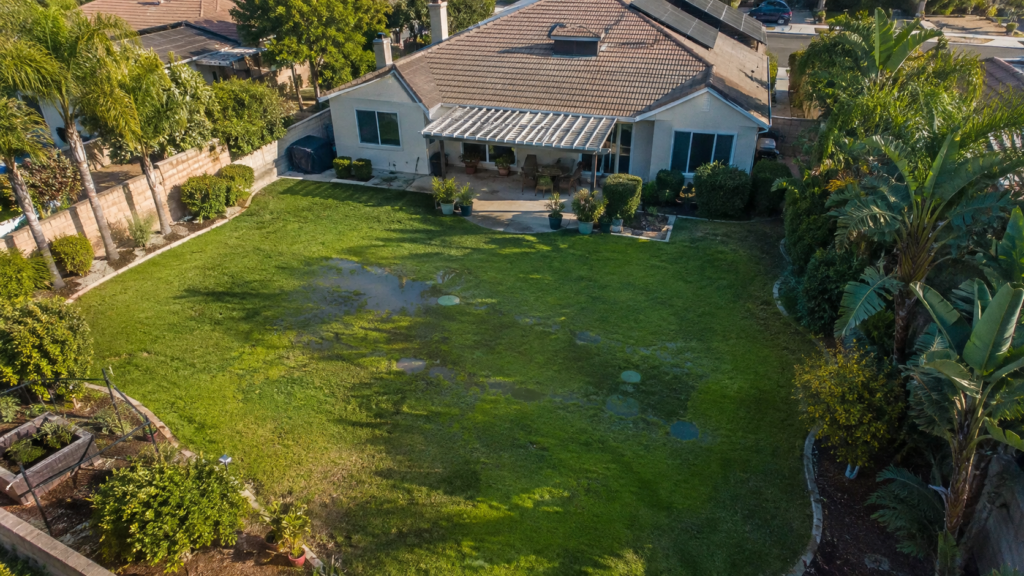
Drain Field Failure: Signs, Causes, and How to Fix It
Drain field failure is one of the most serious problems a septic system owner can face. It often develops slowly, but by the time most homeowners notice the signs, significant damage has already occurred. At Eco Septic Solutions, we inspect and repair drain fields throughout Ventura County. Therefore, knowing the early warning signs can save you thousands of dollars in repairs.
What Is a Drain Field?
The drain field, also called a leach field, is the final stage of your septic system. Liquid effluent flows out of the septic tank and into a network of perforated pipes buried in gravel trenches. From there, the liquid slowly filters down through the soil, where natural bacteria remove harmful contaminants before the water reaches the groundwater table.
A healthy drain field operates silently and invisibly. When it starts to fail, however, the signs become increasingly obvious and unpleasant. In addition, a failed drain field can create health and environmental hazards that affect your neighbors and local water sources.
Warning Signs of Drain Field Failure
Wet or soggy ground above the drain field is one of the earliest and most visible signs. If the soil above your leach field stays wet even during dry weather, the field is likely saturated and no longer absorbing effluent properly. Furthermore, you may notice a spongy feeling underfoot even when it has not rained.
Foul odors in the yard indicate that untreated sewage is surfacing. This smell resembles rotten eggs or raw sewage and tends to be strongest directly above the drain field. As a result, it can also affect neighboring properties and create an unpleasant environment around your home.
Slow drains throughout the house point to a backup in the system. When the drain field cannot accept effluent, the liquid has nowhere to go. Consequently, it backs up through the tank and into your home’s plumbing. If multiple drains are slow at the same time, the problem is almost certainly in the septic system rather than a single pipe.
Sewage backup inside the home is the most urgent sign. If wastewater backs up into toilets, showers, or sinks, the system requires immediate attention. Read our post on what to do during a septic tank backup for the immediate steps to take.
Unusually green or lush grass over the drain field may seem like a good thing, but it signals that sewage is fertilizing the soil from below. This means effluent is surfacing or sitting too close to the ground surface instead of filtering properly.
Common Causes of Drain Field Failure
Infrequent pumping is the leading cause of drain field problems. When a septic tank goes too long without pumping, solids overflow into the drain field pipes. These solids clog the perforations and the surrounding gravel layer. Over time, the biomat that forms blocks absorption entirely. For guidance on service intervals, read our post on how often to pump your septic tank in California.
Non-biodegradable materials flushed into the system also damage drain fields. Wipes, grease, and chemicals disrupt the bacterial balance inside the tank and allow solids to escape into the field. In addition, chemical drain cleaners kill the bacteria that break down waste, causing solids to accumulate faster. Our post on what not to flush with a septic system covers this in detail.
Hydraulic overload occurs when too much water enters the system too quickly. Doing multiple loads of laundry in one day or hosting large gatherings puts excessive water through the tank. As a result, the drain field receives more liquid than it can absorb and becomes saturated temporarily. Repeated overloading leads to permanent failure.
Compaction from vehicles or heavy equipment crushes the pipes and gravel layer beneath the soil. Never park vehicles, place heavy equipment, or build structures over a drain field. Furthermore, tree roots from nearby landscaping can infiltrate and block the perforated pipes over time.
Soil saturation from heavy rain temporarily overwhelms drain fields, especially in clay-heavy soils common in parts of Ventura County. If your drain field shows signs of failure only after heavy rain, the soil composition may not be ideal for your current system design.
Can a Failed Drain Field Be Fixed?
In some cases, yes. The right solution depends on how far the failure has progressed and what caused it.
Resting the drain field works in minor cases of hydraulic overload. Reducing water use for several weeks allows the soil to dry out and recover some absorption capacity. However, this is a temporary fix and only works if the field has not suffered structural or biological damage.
Hydro-jetting the pipes can clear biomat and debris from the perforated pipes in early-stage failures. This restores some flow and buys time, but it does not solve the underlying issue if solids have been escaping the tank for a long time.
Drain field restoration treatments use beneficial bacteria and enzymes to break down the biomat layer that blocks absorption. These treatments work best when applied early. Furthermore, they must be combined with proper pumping and flushing habits to be effective long-term.
Full drain field replacement is necessary when the field has suffered irreversible damage. This is the most expensive septic repair a homeowner faces, often ranging from $5,000 to $15,000 or more depending on the size and soil conditions. Therefore, early detection and prevention are always the better investment.
How to Prevent Drain Field Failure
Prevention is straightforward and far less expensive than repair. Pump your septic tank on schedule, typically every three to five years for a standard household. Avoid flushing anything other than waste and toilet paper. Spread laundry loads across the week to prevent hydraulic overload. In addition, keep vehicles and heavy objects off the drain field area at all times.
The EPA recommends regular inspections as the most effective way to catch drain field problems early. Additionally, the California Water Resources Control Board sets standards for septic system maintenance that protect both homeowners and the environment.
Eco Septic Solutions Is Here to Help
If you notice any signs of drain field failure, do not wait. Early intervention dramatically improves your options and reduces costs. Eco Septic Solutions provides drain field inspections, camera inspections, hydro-jetting, restoration treatments, and full replacement services throughout Ventura County.
We serve Ojai, Ventura, Oxnard, Camarillo, Thousand Oaks, Moorpark, Simi Valley, Fillmore, Santa Paula, and all surrounding communities. Our team is licensed, insured, and available 24 hours a day for emergencies.
Call us at (805) 670-1305 or contact us online to schedule an inspection today.


